


The Gardens The Gallery Gardens Rooms Collectibles Shop Patio Shop Holiday Shop This Month Landscaping Basket Monthly Calendar New In The Garden Weekly Update This Month Roses The Coastal Gardner Care Sheets

ORANGE COUNTY GARDENING CALENDAR
A month-by-month Guide To Gardening Success In Our Climate
By Ron Vanderhoff

Click here for Roger's Lectures & Events Schedule


Annuals


Avocados


Azaleas


Bearded Iris


Bulbs, Rhizomes, Tubers...


California Native Plants


Camellias

Citrus


Clematis


Deciduous Fruit Trees


Fuchsias


Gardenias


Groundcovers


Herbs


Hydrangeas


Lawns


Perennials


Records, Catalogs, Books, & Organizations


Roses


Shrubs & Vines


Soil Care

Sweet Peas


Trees


Tropical & Subtropical


Tuberous Begonias


Vegetables


Wisterias


Annuals:

(See also Sweet Peas and Wildflowers)

This is definitely a month for planting warm-season annuals. The nights are consistently warmer, the days are longer sunnier and the thermometer is rising.

Warm-season annuals should are in abundant supply and in all sizes right now. Get them planted now, before it gets too hot. They will establish a bit easier now than they will in July or August and irrigations will be a bit easier also. Choices include petunias, lobelia, verbena, marigold, ageratum, cosmos, impatiens, coleus, torenia and begonias.

If you need some real hot weather sizzlers try dahlias, zinnias, gomphrena, cleome, portulaca and lisianthus. These absolutely love the heat.

Keep deadheading (removing spent flowers) from annuals to help them continue blooming abundantly.

Avocados:

Avocados are still growing well right now and the plants should look at about their healthiest of the year.

Irrigate as needed to keep the soil moist, but not wet.

This is a very good month for planting avocados. Being sub-tropical plants, avocados prefer to be planted at the beginning of the long warm half of the year.

Don't be alarmed by a lot of leaf drop on mature plants. Avocados produce a lot of leaf litter nearly year round. This is a normal condition.

Keep a very thick blanket of mulch, compost or fallen leaves under mature avocados at all times.

Azaleas:

Most varieties are about finished blooming now, however a few are summer bloomers.

A light application of an acid fertilizer, like cottonseed meal, is good now as they enter into their "growth" season. In the ground, only two feeding per year are necessary. Your next feeding will be in September.

Never cultivate under an Azalea. A thick layer of organic mulch is a better idea.

They don't require pruning, but if you do need to shape them or reduce their size this is the time to do it.

Bearded Iris:

Most bearded iris are now in full bloom or a few may have already even finished this flower cycle.

If you are growing any of the new "repeat-blooming" varieties they may cycle again in as little as a month or two. Keep feeding these re-bloomers aggressively. Older "once-blooming" varieties can have their feeding reduced in half. Any fertilizer labeled for roses (by not with insecticides or other added ingredients) will do fine.

Trim off the faded flower stalk just above the foliage when the last flower fades.

If you need to add more iris to your garden you can still do it now. Select blooming plants now.

Bulbs, rhizomes, tubers, etc:

(See also Bearded Iris and Tuberous Begonias)

The big burst of spring flowering bulbs is now transitioning into warmer weather species. Bulbs that will likely be in flower now in Orange County include some alliums, bletilla, calla, gladiolus, hippeastrum, some true lilies, ornithogalum, sprekelia, tigridia, tritelleia (highly recommended) and watsonia.

As spring bulbs finish blooming do not hurry to cut back the foliage or ignore the plant. Keep the leaves in place and continue watering until the leaves naturally turn brown and dry, then you can cut them off. One-year bulbs like most anemone, crocus, hyacinth, muscari, ranunculus and tulips, should be pulled and tossed after they are done blooming.

Plant new tuberose tubers now or re-plant those that you lifted last November and have had in storage.

California Native Plants:

A few California natives will still be blooming and growing, but most will already be slowing down and preparing for the long, hot and dry summer months.

Be very cautious irrigating most of our native plants during the summer. Most of these are adapted to a winter wet - summer dry moisture cycle. Too frequent irrigations now (especially in soils with a clay content) will certainly cause problems.

Camellias:

A few Japanese Camellias may still be in bloom. As soon as your camellia finishes blooming do any shaping or other pruning to the plant.

Depending upon your plant, you may be at the beginning, middle or end of your camellia fertilizing for the year. Apply the first of three feedings to your camellia about 4-6 weeks after it finishes blooming. Use an "azalea/camellia" or acid based fertilizer, like cottonseed meal. Apply a light application (camellias are not heavy feeders) evenly around the base of the plant, but do not dig it into the soil. The second feeding is 4-6 weeks later and the final feeding will be 4-6 weeks later again.

This is a good time to apply a fresh, thick, organic mulch under your camellias. This mulch will keep the roots cooler during the warm summer months, improve the soil quality and reduce watering requirements. Carefully rake up any fallen flowers and, if fertilizing this month, apply the fertilizer first, before the mulch.

Citrus:

Citrus are growing well this month and a few may even have some flowers on them.

Continue fertilizing this month and every month from now until July. Use a fertilizer that is rich in such trace minerals as iron, zinc, manganese, copper and others. These ingredients are usually well represented in organic fertilizers like Dr. Earth.

Honeybees are pollinators for citrus. Encourage them and avoid anything that might discourage them.

'Kara' tangerines may be ripe by now or very soon. This about the only summer bearing mandarin and needs a warm inland location. Tangelos may also be close to ripe.

Valencia oranges may look like they are ready to harvest but probably will not have developed their sugar content yet. Resist the temptation to pick them this early and let them sit on the tree for another month or two to develop a higher sugar content.

If ants are crawling up the trunk of the tree apply Tanglefoot (a sticky, waterproof substance) to stop them.

Clematis:

Along with April, this will be the heaviest blooming month for most clematis. Keep feeding them with a balanced organic fertilizer to keep them going. If your soil is slightly alkaline (high pH) periodically alternate fertilizing with an acid product such as Cottonseed Meal.

Keep the roots cool and shaded wherever possible, but not the tops. Planted a small shrub or a couple of perennials just to the south side of the roots will help. In addition, apply a very generous organic mulch over the surface of the soil.

Deciduous Fruit Trees:

As the weather warms, be sure to monitor the soil moisture and irrigate as needed.

Several varieties will "drop" a lot of their fruit about now or next month. Don't be alarmed; this is normal, since the tree cannot usually support all of the fruit that it originally sets.

After the "drop" is completed is the best time to thin any remaining fruit. Emotionally, this is one of the most difficult things for a gardener to do and therefore often avoided. However, well-spaced fruit will develop into a higher quality crop and the fruit size will be larger as well.

Fuchsias:

Your plants will be in full bloom now.

Keep fertilizing regularly with a balanced fertilizer or one slightly higher in phosphorus, to promote blooms.

Keep the plants well watered, especially during a warm spell and any plants in hanging baskets.

Groom the plant periodically by removing dead flowers and any developing seedpods.

Watch for Fuchsia Gall Mites, a serious pest of these plants. Look for any signs of puckered or distorted new growth. If you discover any, pinch it out and dispose of it immediately. Treatment is usually required.

Gardenias:

Gardenias should be budding and blooming well this month.

Keep them well fed through the summer months. Use a fertilizer with trace minerals, such as most organic types and alternate this with an acidic formula to keep the pH down.

If the leaves are showing signs of green veins with yellow areas between the veins, especially on the new growth, they need additional iron.

Groundcovers:

Cool season groundcovers are still blooming, but the heat will soon catch up with them, especially in warm inland gardens and on south facing slopes.

Warm season groundcovers have waking up and are growing again and possibly blooming as well. If you didn't last month, feed these now with a balanced, organic granular fertilizer.

This still is a good time to perform a heavy cutting-back of warm-season varieties. Many groundcovers build up considerable thatch and loose their vigor if not cut back periodically. Hurry to get this chore done now, before the weather heats up too much more. Fertilize after the cut-back, for quick recovery.

California native groundcover plants, like Ceanothus and Arctostaphyllos (Manzanita) may still be showing some blooms. Although tempting, this is not a good month to plant these. Wait until late this fall.

Step up irrigations as needed, especially in sunny areas or on slopes.

Herbs:

Many perennial herbs can be planted nearly year-round, but are particularly well suited to spring planting, since they thrive during the warm summer months. These include marjoram, oregano, rosemary, sage, thyme, catmint, catnip, chamomile, comfrey, feverfew, lavender, lemon balm, lemon grass, lemon verbena, St. johns wort, tansy, tarragon and thyme.

Plant the annual "summer savory" now in the warm weather. The perennial "winter savory" can also be planted now, however the flavor of the perennial version is generally considered inferior.

This is still a good time to rejuvenate certain old or tired herbs by giving them a hard trim. These include chamomile, chives, garlic chives, lemon balm, lemon grass, marjoram, mint, oregano, salad burnet, sorrel, St. johns wort, thyme and watercress. All of these can be scalped almost to the soil line and, with fertilizing, will recover quickly. Other herbs like catmint, catnip, feverfew, lemon verbena, rosemary, rue, sage and tansy should be cut a bit higher. Cut lavender only very lightly.

Hydrangeas:

These should be growing nicely and most will even be blooming.

Apply a moderate feeding.

Do not prune hydrangeas at all this time of the year. Pruning now will eliminate most of the flowers.

If you want to try to get blue or lavender flowers on your otherwise pink plant you should make your final application of Aluminum Sulfate to the soil (assuming your plant has not already bloomed).

Lawns:

Apply your second and last application of pre-emergent Crabgrass Control to lawns to prevent crabgrass.

If needed, de-thatch and aerate lawns like hybrid bermudagrass and St. Augustine this month.

Remember, cool-season lawns should be mowed about a half an inch higher in the warm months than in the cool months. This is a good month to raise the height.

It's getting a bit late to attempt to plant new cool-season lawns from seed or sod (fescue/Marathon, ryegrass, bluegrass).

Continue feeding all lawns this month. Cool-season grasses like fescue, ryegrass and bluegrass are still growing well. Warm-season grasses like bermudagrass, St. Augustine and zoysia are also growing quickly in the warming temperatures.

This is a great month to plant warm-season lawns (hybrid bermudagrass, St. Augustine, etc.) from sod.

Perennials:

(See also Bearded Iris, Bulbs/Rhizomes/Tubers, Fuchsias, and Tuberous Begonias)

This is still a good planting month for perennials. The selection is good and many will be in bud or bloom. Be sure to keep them well watered as these young plants head into the warm summer months.

Keep fertilizing your perennials. The frequency and amount will depend upon the formulation that you are using. If you have been building up your soil health your fertilizing duties will be much reduced.

Most of your perennial "chores" have already been done. Enjoy your perennials in all their colorful glory.

Sub-tropical perennials have perked up now and should be putting on new growth and maybe even buds and flowers. This is also a good month to plant these heat lovers. These include begonias, heliotrope, impatiens, lamium, pentas (starflower) and plectranthus.

Keep tying the flowering spikes of tall, upright, spiking perennials, like dahlia, delphinium, foxglove, true lilies and monkshood (aconitum) to the bamboo stakes that you put in earlier in the year.

Removing the myriad of spent or old flowers regularly always helps them to produce more new flowers. This is a good time to cut some fresh flowers for a vase as well.

Records, Catalogs, Books and Organizations:

This is another great month to be making lots of entries into your garden journal. Make notes now about what is blooming, what you like, what you don't like, plant combinations and so on. Especially important are the entries that you will make now that guide your garden activities this fall.

Continue making notes about your roses; which are performing well and which are not. Notes on disease tolerance will be useful next winter if you decide to upgrade any plants.

This is another month of many home garden tours. If you haven't participated in one of these before you have missed one of the most rewarding gardening experiences.

Click here for our Lectures & Events Schedule

Roses:

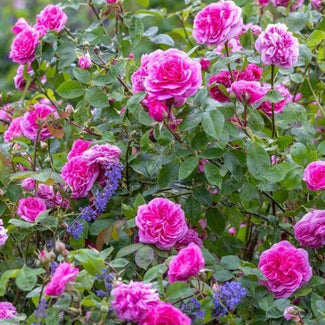
In most gardens this will be the biggest rose bloom of the year. The flowers will be huge and the colors rich. The flowers will hold their form well in the May temperatures. Enjoy the show.

If you love roses, this is a great month to get out and visit other great public roses gardens. The biggest and best are at Roses Hills Memorial Park (Whittier), the Richard Nixon Library (Yorba Linda) and The Huntington Botanical Gardens (San Marino).

Roses are heavy feeders; continue fertilizing them regularly. Do not use soil-applied fertilizers that are combined with a systemic insecticide. These are very disruptive to soil life (beneficial microorganisms, bacteria, mycorrhizal fungi, earthworms, etc.). Many rosarians also believe they reduce rose vigor.

Granular, well-balanced, organic fertilizers work especially well for roses and encourage beneficial soil life.

Keep deadheading roses as they fade. Cut them just above a leaf with five leaflets. Floribunda's, many English roses and some others are deadheaded on very short stems until the last of the flowers in the cluster have faded. Then cut down to just above the first leaf with five leaflets.

Be on the lookout for pests. Aphids will be less of an issue as the weather warms up now and can usually be hosed off with a strong jet of water. Flower thrips may require an insecticide.

Keep on the lookout for diseases. Powdery mildew and rust are the primary issues. In warm inland gardens these are primarily springtime issues and in another month or so may disappear by themselves. Regular grooming, early removal of infested leaves, good air circulation and full sun will help considerably.

If diseases do require a fungicide, use one of the newer, safer, organic products available. These include Rose Defense (a neem oil extract), E-Rase (jojoba oil) or Saf-T-Side (straight paraffinic oil).

Potted roses are still in good supply and the selection is excellent now at the nursery. It is a good time to add more or upgrade any that you are struggling with.

One of the most obvious pests, especially in coastal gardens has now shown up. Commonly called "Rose slug", it is not a slug at all, but the larval form of a fly relative, called a Sawfly. These little caterpillar-like pests are hard to spot, but chew on the undersides of foliage. Pyrethrin sprays work well, but the applications must be thorough, frequent and applied to the undersides of the leaves.

Irrigations should be frequent now as the weather warms and the days lengthen.

For the biggest flowers pinch out some of the competing buds while they are very small.

Hose off the foliage of roses frequently. Contrary to popular myth, this will actually reduce the likelihood of powdery mildew and keeps the foliage clean and healthy looking.

Shrubs & Vines:

(See also the information under Azaleas, Camellias, Gardenias, Hydrangeas and others)

In general, many shrubs will be growing quickly now and they may want to grow too large for their space. They may even want to grow into small trees. This may be what you want, but if not they will need clipping to restrain them. Pruning these shrubs is best done just following their bloom cycle, which may be now.

Hedges are growing fast.

If you haven't already, this is about the last chance to prune winter and spring flowering vines that have finished their bloom cycle for this year. These include Pink Jasmine (Jasminum polyanthemum), Hardenbergia species (Lilac Vine), Jessamine (Gelsimium species), Cat's Claw (Macfadyena unguis-cati), Flame Vine (Pyrostegia venusta) and Wisteria (see separate entry).

Don't prune summer blooming vines - those that haven't flowered yet.

Soil Care:

We have included this section, because as you know, or will discover with more experience, a good garden begins with the soil. Investing in the soil, managing the soil and protecting the soil are not afterthoughts in a successful garden, but the foundation. Healthy soil is living and breathing, teaming with earthworms, microorganisms, beneficial fungi, bacteria, microbes and other invisible life. This section, possibly the most important topic of all will, provides some helpful guidance to good soil care. 

A thick layer of organic mulch, averaging about two inches, should be maintained on top of the soil year-round. Add additional mulch as needed to maintain this level. A thick layer of mulch will cool the root systems from hot summer temperatures, reduce irrigations as much as half this summer, reduce weed growth, and improve both soil life and soil quality.

If you have been considering inoculating your soil with beneficial mycorrhizae, this is still a great month in which to do it. The soil temperatures are right for quick establishment. Inoculation can be done very quickly and easily in established areas by using mycorrhizae "tablets". In moist soil, poke a hole near the plant with a ½" or ¾" rod or stick. Drop a tablet into the hole and push it in again with the stick.

We do not suggest the use of very high analysis fertilizers in a garden, especially phosphorus. Examples of fertilizers to avoid are synthetic versions with formulations like, 10-55-10, 10-30-10, etc. We don't even suggest the popular 15-30-15 formula. These formulations will inhibit or even destroy much of the soil life that is so vital to a healthy sustainable soil.

We also suggest that you not use soil-applied systemic fertilizer/insecticide combinations (especially popular with roses). These are very damaging to soil life.

Use insecticides only when necessary and even then use the least damaging product available. Many of these products move into the soil and interfere with the invisible soil life.

If you can, begin a compost pile or purchase a compost bin. Leaves, clippings, kitchen produce scraps, and many other ingredients can be composted and returned to the garden. Home compost is one of the very best ingredients you can add to your soil and the warm air temperatures of summer will help the composting process to happen quickly. The benefits are huge in the areas of disease suppression, increasing beneficial microorganisms, improving soil structure and texture, nutrient retention and nematode suppression.

Sweet Peas:

These should still be blooming wonderfully now, as long as you have been feeding and removing the dead flowers religiously. This deadheading may be as often as twice a week.

Keep feeding them regularly.

They may be showing a little heat stress, particularly at their bases with some yellowing and drying.

Trees:

(See also the information under Avocados, Citrus and Deciduous Fruit Trees)

This is an acceptable month to prune tender sub-tropical trees like Ficus, Coral Tree, Avocado, Citrus, etc. (most other trees are best pruned in late fall or winter). These sub-tropical trees should not be pruned during the cool winter months. However, care must be taken not to disturb nesting birds at this season. 

Tropicals & Subtropicals:

(See also the information under Avocados and Citrus)

Almost all of these are now awake and growing.

This is a good month to begin serious plantings of these heat lovers.

Fertilize now with a general-purpose organic fertilizer. Most tropicals and sub-tropicals have a higher need for trace minerals like iron, zinc, manganese and others. Organic fertilizers generally contain lots of these trace minerals and work especially well in the warm soil temperatures present now.

The real heat-loving tropicals should be awake and growing well now. These include Plumeria, Ginger, Ixora, Heliconia and others.

Watering should be frequent now, but most tropicals and sub-tropicals are particular about quick drainage.

Tuberous Begonias:

Plants should be growing well and with a bit of luck there may already be some buds appearing. Don't worry too much about flowers though. Right now you just want the plants to grow healthy and full. In fact, some gardeners pinch out the first set or two of flowers to focus more energy on the growth of the plant.

Keep fertilizing regularly. They are heavy feeders, especially in containers. Use a well balanced fertilizer and periodically mix in an acid fertilizer, to keep the soil pH low.

Keep them well watered, but not soggy. The soil should be rich and well-drained. The surface of the soil should dry slightly between watering.

If powdery mildew appears treat it by improving air circulation around the plants. Usually this will correct the problem, if not use a fungicide.

Vegetables:

Almost any warm-season vegetable can be planted this month. From transplants or seeds, plant beans, celery, cucumbers, eggplants, lima beans, okra, peppers, squash and tomatoes. Corn, jicama, melons, pumpkin and sunflowers are best planted from seed.

Along the immediate coast gardeners can keep growing many of the cool season crops like arugula, lettuce, peas and members of the cabbage family. However, real heat-loving vegetables like corn, melons, peppers and pumpkins will need a hot south facing wall. 

This may be the best month of all for planting the real heat lovers like corn, eggplant, jicama, lima beans, melons, okra, peppers and pumpkins, now that the soil and night temperatures have warmed.

Plant giant forms of pumpkin toward the second half of this month for a Halloween harvest. Specifically, these are the huge varieties like 'Big Max' and 'Atlantic Giant'. Standard types are planted next month.

The first two or three weeks of flowers on squash and pumpkins are male flowers and will not set fruit. Don't worry when these dry up, everything is ok. The female flowers will be along shortly. Better yet, use these male flowers as a tasty garnish in the kitchen.

Putting in successive plantings of many vegetables a couple of weeks apart from each other will insure a constant, uninterrupted supply for the kitchen.

Keep tomato plants trained inside their cages or, alternatively, up sakes or obelisks.

Potato tubers, from those planted last fall, may still be ready for harvest.

Keep planting corn from seed. Because corn needs to be cross-pollinated it must be grown in clumps or rows. Twelve plants is about the minimum for good pollination & twenty or more is better. Plant crops successively every three to four weeks for a continual harvest. If planted in small groups, hand pollinate.

Beets, carrots, chard, radish and possibly turnips can be planted just about year-round. All but chard are planted from seed only.

Since most annual vegetables are shallow rooted and quick growing, feed them regularly with a well balanced organic fertilizer and keep them well watered during warm weather.

Control weeds before they get out of hand.

Wisterias:

This is the end of the main bloom period for wisterias. If proper pruning was followed all year, the flower show should have been spectacular.

For established plants, wait until next month for the first in a three-pruning-per-year cycle.

On young plants, guide the long, twining stems carefully in the direction that you want.

A better looking plant will be the benefit if you prune off the dead flowers as they finish blooming. This will prevent unattractive seedpods from developing on the plant.

If your wisteria has been planted for only a year or two, be sure to provide it with plenty of water and fertilizer to encourage quick coverage and deep roots.

Established wisterias are better with only an occasional deep summer watering and little, if any, fertilizer other than possibly iron (to correct chlorosis). Wisterias are large, aggressive vines; additional water and fertilizer will only create more rampant growth and more pruning needs.

Continue planting new wisterias now. If possible, choose them while in bloom. Grafted plants are preferred, since they will almost always bloom at a much younger age.

Contact us Directions Careers Links Tour Rogers Media Gift Certificates E-mail Sing up